Utility
 Lite
Lite
Lite
Papua Households Have the Lowest National Rate of Telecommunications Access

Monavia Ayu Rizaty
28/01/2021 09:43
WIB

Memuat...
According to 2017 data from the Central Bureau of Statistics (BPS), Papua had the lowest percentage of households with telecommunications expenditure, at only 53.29%.

- A Font Kecil
- A Font Sedang
- A Font Besar

Access single data
Papua Households Have the Lowest National Rate of Telecommunications Access
Want to get more access to Data Stories with a more affordable price? Subscribe.
By subscribing, you join us in presenting quality data.
Get:
- Premium Data Stories access
- Comfortable reading without ads
- Download data in XLS, PDF, and image format
- Access to data source information
Basic
Rp100.000
Rp50.000/month
Professional
Rp100.000
Rp150.000/month
Institutional
For organizations
We accept the following payments:



Related Data

Latest Data Stories

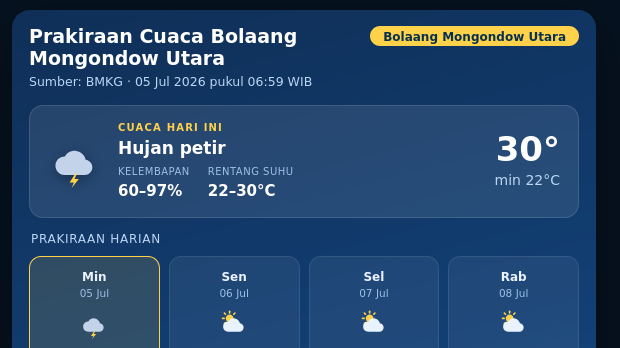
Weather Forecast for Bolaang Mongondow Utara Today, September 5, 2026: Sunny
Demographics
05/09/2026, 16:31
WIB

Per Capita Expenditure per Month in Gorontalo in 2025
Consumer Services & Health
05/09/2026, 15:45
WIB


Market Data
Macro update by
05 September 2026
| Name | Value | % | |
|---|---|---|---|
| Inflasi yoy (Agu) | 3,19% | +0.31 | |
| Inflasi mom (Jul) | -0,14% | -0.58 | |
| Economic growth | 5,11% | +0.08 | |
| Pertumbuhan ekonomi (yoy) (Q1) | 5,61% | +4.08 | |
| Persentase kemiskinan (Mar) | 8,07% | -0.18 | |
| Gini rasio (Sem2) | 0,38 | 0.00 | |
| Nilai Tukar USDIDR | 17.626 | -0.16 | |
| PDB ADHK (Q1) | 3.447,70 | -0.77 | |
| Neraca perdagangan (Jul) | 121,90 | -127.06 | |
| Ekspor Migas (Jun) | 1,07 | +40.52 | |
| Impor Migas (Jun) | 4,56 | +0.96 | |
| Ekspor (Jun) | 25,46 | +9.72 | |
| Impor (Jun) | 25,91 | +4.41 | |
| Kunjungan Wisman (Mei) | 1,38 | +10.69 | |
| NTP (Jul) | 116,16 | +1.32 |
Trending Topics
Popular Data