Most Indonesian Households Will Drink Refilled Water in 2024

Nabilah Muhamad
14/01/2025 17:34
WIB

Memuat...
According to BPS data, the majority, or 34%, of Indonesian households used refilled water as their primary drinking water source in March 2024.

- A Font Kecil
- A Font Sedang
- A Font Besar

Access single data
Most Indonesian Households Will Drink Refilled Water in 2024
Want to get more access to Data Stories with a more affordable price? Subscribe.
By subscribing, you join us in presenting quality data.
Get:
- Premium Data Stories access
- Comfortable reading without ads
- Download data in XLS, PDF, and image format
- Access to data source information
Basic
Rp100.000
Rp50.000/month
Professional
Rp100.000
Rp150.000/month
Institutional
For organizations
We accept the following payments:



Related Data

Latest Data Stories

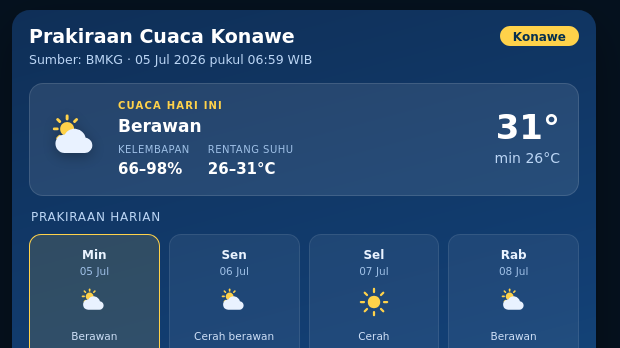
Konawe Weather Forecast Today 14 October 2026: Hazy Air, Temperature 24-31 °C
Demographics
14/10/2026, 10:40
WIB


Global Oil Price Rises to US$ 106.96 per Barrel (Wednesday, 14 October 2026)
Market
14/10/2026, 9:51
WIB
Market Data
Macro update by
14 October 2026
| Name | Value | % | |
|---|---|---|---|
| Inflasi yoy (Sep) | 3,28% | +0.09 | |
| Inflasi mom (Agu) | 0,21% | +0.35 | |
| Economic growth | 5,11% | +0.08 | |
| Pertumbuhan ekonomi (yoy) (Q1) | 5,61% | +4.08 | |
| Persentase kemiskinan (Mar) | 8,07% | -0.18 | |
| Gini rasio (Sem2) | 0,38 | 0.00 | |
| Nilai Tukar USDIDR | 17.872 | -0.11 | |
| PDB ADHK (Q2) | 3.576,20 | +3.73 | |
| Ekspor Migas (Agu) | 992,20 | +25.98 | |
| Neraca perdagangan (Agu) | 3,55 | +2,814.03 | |
| Impor Migas (Agu) | 3,53 | -6.37 | |
| Ekspor (Agu) | 26,61 | +1.51 | |
| Impor (Agu) | 23,06 | -11.63 | |
| Kunjungan Wisman (Agu) | 1,60 | +4.89 | |
| NTP (Jul) | 116,16 | +1.32 |
Trending Topics
Popular Data