WHO and UN Commit to Ending Tuberculosis: Achievements and Targets

Erlina Fury Santika
08/05/2025 15:15
WIB

Memuat...
The WHO and UN member states have agreed to end the global tuberculosis (TB) epidemic. This is an overview of the target outlined in the WHO's Global Tuberculosis Report 2024.

- A Font Kecil
- A Font Sedang
- A Font Besar

Access single data
WHO and UN Commit to Ending Tuberculosis: Achievements and Targets
Want to get more access to Data Stories with a more affordable price? Subscribe.
By subscribing, you join us in presenting quality data.
Get:
- Premium Data Stories access
- Comfortable reading without ads
- Download data in XLS, PDF, and image format
- Access to data source information
Basic
Rp100.000
Rp50.000/month
Professional
Rp100.000
Rp150.000/month
Institutional
For organizations
We accept the following payments:



Related Data


Latest Data Stories


All IDX Stock Sectors Plummeted Over the Past Week (October 12-16, 2026)
Market
19/10/2026, 10:24
WIB

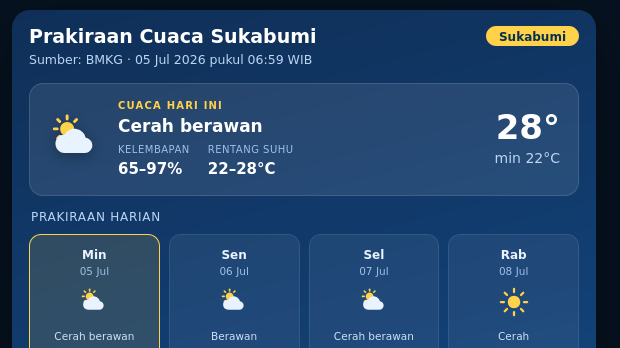
Sukabumi Weather Forecast Today 19 October 2026: Cloudy, Temperature 22-32 °C
Demographics
19/10/2026, 10:18
WIB

Market Data
Macro update by
19 October 2026
| Name | Value | % | |
|---|---|---|---|
| Inflasi yoy (Sep) | 3,28% | +0.09 | |
| Inflasi mom (Agu) | 0,21% | +0.35 | |
| Economic growth | 5,11% | +0.08 | |
| Pertumbuhan ekonomi (yoy) (Q1) | 5,61% | +4.08 | |
| Persentase kemiskinan (Mar) | 8,07% | -0.18 | |
| Gini rasio (Sem2) | 0,38 | 0.00 | |
| Nilai Tukar USDIDR | 18.013 | -0.12 | |
| PDB ADHK (Q2) | 3.576,20 | +3.73 | |
| Ekspor Migas (Agu) | 992,20 | +25.98 | |
| Neraca perdagangan (Agu) | 3,55 | +2,814.03 | |
| Impor Migas (Agu) | 3,53 | -6.37 | |
| Ekspor (Agu) | 26,61 | +1.51 | |
| Impor (Agu) | 23,06 | -11.63 | |
| Kunjungan Wisman (Agu) | 1,60 | +4.89 | |
| NTP (Jul) | 116,16 | +1.32 |
Trending Topics
Popular Data