Trade
 Lite
Lite
Lite
Export Performance Down in Early 2023, Manpower Minister Allows Industries to Cut Workers' Wages

Adi Ahdiat
16/03/2023 11:30
WIB

Memuat...
Indonesia's export value has fallen for six consecutive months from September 2022 to February 2023. Amidst this situation, the Minister of Manpower has permitted affected industries to reduce employ

- A Font Kecil
- A Font Sedang
- A Font Besar

Access single data
Export Performance Down in Early 2023, Manpower Minister Allows Industries to Cut Workers' Wages
Want to get more access to Data Stories with a more affordable price? Subscribe.
By subscribing, you join us in presenting quality data.
Get:
- Premium Data Stories access
- Comfortable reading without ads
- Download data in XLS, PDF, and image format
- Access to data source information
Basic
Rp100.000
Rp50.000/month
Professional
Rp100.000
Rp150.000/month
Institutional
For organizations
We accept the following payments:



Related Data


Latest Data Stories

10 Maluku Provincial Government Work Units with Highest SPI Scores 2025
Political
03/10/2026, 17:40
WIB
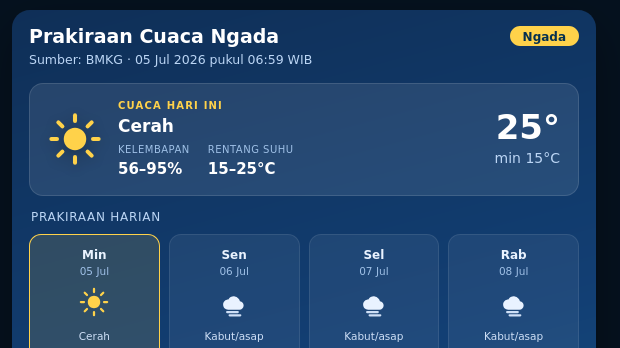
Ngada Weather Forecast Today 03 October 2026: Cloudy, Temperature 20-33 °C
Demographics
03/10/2026, 16:42
WIB


Market Data
Macro update by
03 October 2026
| Name | Value | % | |
|---|---|---|---|
| Inflasi yoy (Sep) | 3,28% | +0.09 | |
| Inflasi mom (Agu) | 0,21% | +0.35 | |
| Economic growth | 5,11% | +0.08 | |
| Pertumbuhan ekonomi (yoy) (Q1) | 5,61% | +4.08 | |
| Persentase kemiskinan (Mar) | 8,07% | -0.18 | |
| Gini rasio (Sem2) | 0,38 | 0.00 | |
| Nilai Tukar USDIDR | 17.889 | -0.41 | |
| PDB ADHK (Q2) | 3.576,20 | +3.73 | |
| Ekspor Migas (Agu) | 992,20 | +25.98 | |
| Neraca perdagangan (Agu) | 3,55 | +2,814.03 | |
| Impor Migas (Jul) | 3,77 | -17.33 | |
| Ekspor (Agu) | 26,61 | +1.51 | |
| Impor (Jul) | 26,09 | +0.72 | |
| Kunjungan Wisman (Agu) | 1,60 | +4.89 | |
| NTP (Jul) | 116,16 | +1.32 |
Trending Topics
Popular Data